 |
||||||||||||||||||||||||||||||||||||||||||||||
|
In all the fractions we have seen so far, the top number (numerator) has been smaller than the bottom number (denominator). If we want to work with numbers greater than one, we need to use improper fractions or mixed numbers.
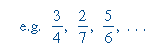
Improper fractions have a larger numerator than denominator.
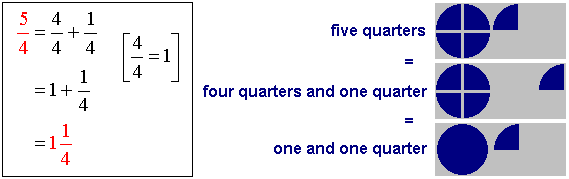
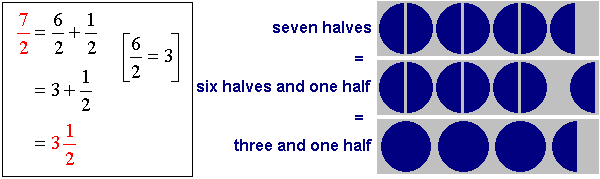
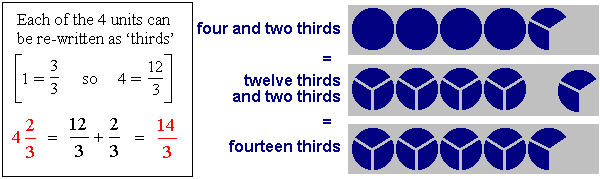
We can also convert mixed numbers back into improper fractions.
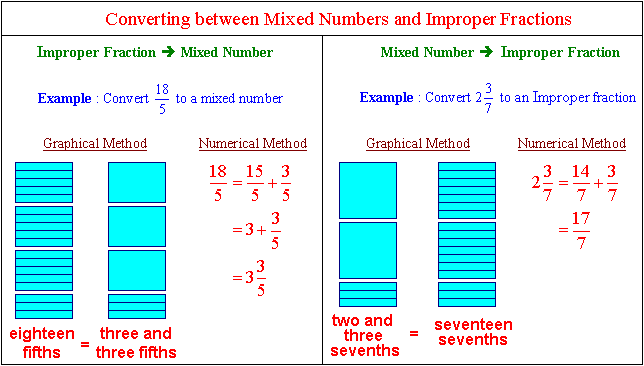 Example QuestionAnswer these questions using which ever method you find easiest.
Practice Questions

ExercisesWork out the answers to the questions below and fill in the boxes. Click on the button to find out whether you have answered correctly. If you are right
then
button to find out whether you have answered correctly. If you are right
then  will appear and you should move on to the next
question. If will appear and you should move on to the next
question. If  appears then your answer is wrong. Click
on to clear your original answer and have another go.
If you can't work out the right answer then click on appears then your answer is wrong. Click
on to clear your original answer and have another go.
If you can't work out the right answer then click on
 to see
the answer. to see
the answer.
Question 1
Question 2
| ||||||||||||||||||||||||||||||||||||||||||||||


 to see whether you are correct.