
Scientific Notation
Standard Form
Standard form is a convenient way to write very large or very small numbers. It is particularly useful when working with a scientific calculator.
In standard form a number is written as
a × 10n where 1 ≤ a < 10 and n is an integer
That is, a is a number greater than or equal to 1 and less than 10, and n is a positive or negative whole number.
Note
Because of the way that the powers of 10 are used in standard form, it is important to remember that:| 104 | = 10 000 | and | 10−4 | = 0.0001 |
| 103 | = 1000 | 10−3 | = 0.001 | |
| 102 | = 100 | 10−2 | = 0.01 | |
| 101 | = 10 | 10−1 | = 0.1 | |
| 100 | = 1 |
Worked Examples
1
Write each of the following numbers in standard form.
(a)
346 000 000
Show me
| 346 000 000 | = 3.46 × 100 000 000 |
| = 3.46 × 10⁸ |
(b)
2710
Show me
| 2710 | = 2.71 × 1000 |
| = 2.71 × 10³ |
(c)
0.000 543
Show me
| 0.000 543 | = 5.43 × 0.0001 |
| = 5.43 × 10⁻⁴ |
2
Find
(a)
4.21 × 10²
Show me
| 4.21 × 10² | = 4.21 × 100 |
| = 421 |
(b)
3.1 × 10⁵
Show me
| 3.1 × 10⁵ | = 3.1 × 100 000 |
| = 310 000 |
(c)
3.6 × 10⁻²
Show me
| 3.6 × 10⁻² | = 3.6 × 0.01 |
| = 0.036 |
(d)
4.7 × 10⁻³
Show me
| 4.7 × 10⁻³ | = 4.7 × 0.001 |
| = 0.0047 |
3
Write each of the following numbers in normal decimal form.
(a)
3.217 × 10³
Show me
| 3.217 × 10³ | = 3.217 × 1000 |
| = 3217 |
(b)
3.68 × 10⁵
Show me
| 3.68 × 10⁵ | = 3.68 × 100 000 |
| = 368000 |
(c)
4.7 × 10⁻⁴
Show me
| 4.7 × 10⁻⁴ | = 4.7 × 0.0 001 |
| = 0.00 047 |
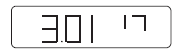
Most calculators can work with numbers in standard form. On a calculator display
4
Calculate 366 ÷ 0.0012 and write the answer
(a)
exactly,
Show me
| 366 ÷ 0.0012 | = |
| = | |
| = 305 000 |
(b)
in standard form.
Show me
305 000 = 3.05 × 10⁵ in standard form.
Exercises
